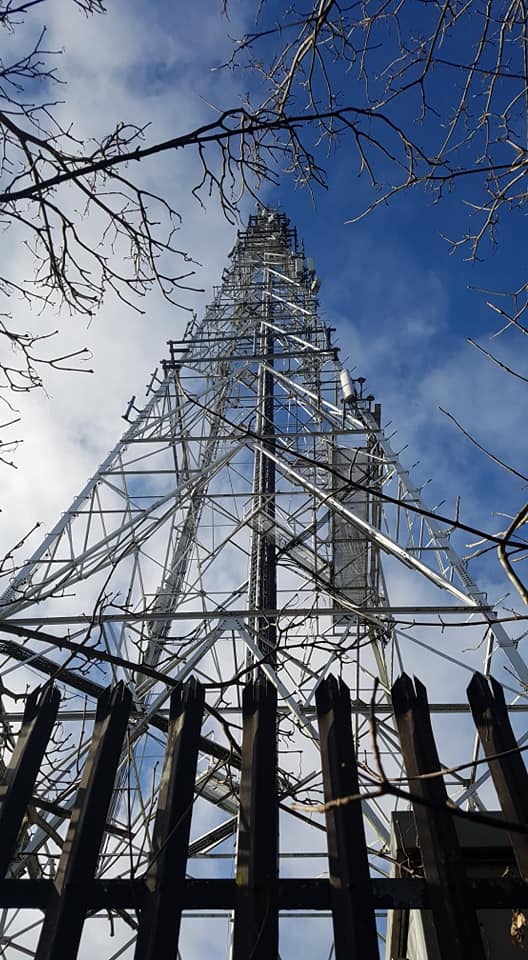
Yesterday felt like the first day out of the winter, maybe not spring but a step towards it- sun shining, blue skies, wispy clouds, first shoots of flowers appearing.
Brian Eno's work has always been very linked to colours, from his album with his brother Roger last year (Mixing Colours) all the way back to the 70s. Deep Blue Day is beautiful piece of work, recorded for his 1983 Apollo: Atmospheres And Soundtracks album and re- used in 1996 in Trainspotting in the scene where Renton dives into The Worst Toilet In Scotland in search of a suppository. Deep Blue Day (recorded with Roger Eno and Daniel Lanois) is gorgeous, an gently ecstatic drift of synths and pedal steel guitar.
That gives me the excuse, if one were needed, to post this re-edit by Mojo Filter of Eno's 1975 classic Another Green World, Eno's semi- ambient, piano led original pushed into Balearic waters with a drumbeat and a truckload of samples, including a child saying 'L- O- V- E, Love'. Play one, then the other- Sunday morning sorted.
Drifting through the Freeview channels a couple of weekends ago I found the old BBC2 programme Sounds Of The Sixties and in my slightly red wine affected haze a black and white performance by Tim Buckley, originally from Late Night Line Up in 1968.
Such a strange combination of instruments and sounds- Buckley's folk guitar, the jazz chords and runs of the guitarist along with the rhythm section of double bass and congas. On top, Buckley's voice with those detours he takes into yodelling. The TV says the song is called I'm Coming Home but the song as it appeared on his 1969 album was called Happy Time. I found it very odd but entrancing when it was on and as soon as it finished I rewound the TV and watched it again, unexpectedly drawn in by Tim Buckley's psychedelic jazz- folk fusion.
This song, from 1967, is a bit less startling but still pretty hypnotic, a three and a half minute swirl, the words and the voice tumbling over the music (piano, acoustic guitar, drums), no chorus or hooks to speak of, just this acoustic psychedelic flow
One of my favourite songs of last year was Formerlover's Correction Dub, a track released on a compilation called Galactic Service Broadcasting Vol. 1 last May. Justin Robertson and Sofia Hedblum combined dub space and bass with Nigerian rhythms and a vocal giving instructions and asking questions via a late night chat line. Video here.
In September last year there was a second Formerlover release which to my shame I missed until this week. Bassline from Jamaica, percussion from Lagos, slide guitar from the Delta, echo from the 1960s, a surf guitar lick, a Miami beach vibe, another unmissable vocal- not only do these seemingly disparate influences work together really well but sound like they were made specifically for each other, like four different records playing at once. Buy it and a dub version at Bandcamp and put some shimmy into your Friday.
This photo was taken at dusk somewhere near the French/ Belgian border in July 2016- I remember the date but not the exact location. I'm going to say Belgium because that allows my tour of Europe through holiday photos to extend into another day and the excuse to post some Belgian New Beat.
In 1987/ 1988 northern France and Belgian clubs played a style of music known as Electronic Body Music, a hard edged dance music made by groups like DAF, Front 242 and Die Krupps, a sort of tough punkish dance music. At the Ancienne Belgique nightclub in Brussels DJ Dikke Ronny accidentally played Flesh by A Split- Second at the wrong speed, 33 instead of 45rpm, but with the pitch control at +8 and the crowd's reaction sent him looking for other records to pitch down- repetitive beats, sequenced basslines, sirens, sampled voices slowed down issuing commands.
Early house records fitted in with the sound as did records by 80s electronic artists such as Fad Gadget and the techno and acid coming out of Detroit and Chicago in the late 80s. The scene was short lived, eventually replaced by house, but the This Is New Beat compilation spread the sound beyond Belgium. This track, a collision of acid and New Beat was made by Italian Bruno Sanchioni under the name Dr. Phibes and released on Belgian label DiKI Records in 1988, sparse, hypnotic, underground music.
I don't know if posting photographs of beautiful places in Europe I've been to in the last decade is the best way to deal with lockdown in February but yesterday's picture of the Alps suggested I follow suit, so I'm heading heading south- east out of France and over the Alps to Italy. In July 2018 I spent a week there, a few days in Rome (top) and then a few in Sorento including a visit to Pompeii (bottom), on a school trip so I had a party of fifty- six teenagers with me. Returning to Italy is something I'd really like to do if/ when we can go abroad again (and maybe next time without responsibility for fifty- six teenagers). In the late 80s and early 90s Italy was home to some of the best house producers on the planet. This track is from Dreamatic, released in 1991, euphoric and dreamy Italo house with one of those sumptuous basslines you feel like you could ride on and floaty synths and a very apt title.
One of our eldest Isaac's pastimes is to watch photographs stored on the computer as a slideshow, a non- stop stream of holiday photos, days out, birthdays and my shots of urban dereliction. He got up and wandered away from it the other day and must have tapped the keyboard, because when I came back to the computer the slideshow had stopped on this photo, a picture I took in August 2013 of the mountains above Lake Annecy, nestled in the French Alps. We camped at the southern end of the lake for two weeks and our tent faced out of the campsite, towards the Alps. The view, changing all day as the sun rose, climbed above the mountains and then set, was stunning.
A French group to go with the French Alps. The Liminanas are a husband/ wife beat group, equal parts the Velvets, Yé-yé, poetry, cigarettes and fuzz guitars. This song came out on 7" in 2015 and has British writer, actor and musician Kirk Lake on spoken word vocals telling a tale of a French mirror workshop and the nature of reflection, with mentions of mermaids, Jean- Paul Sartre and a fire.
This is a photo of sunset on Mars- clearly not my picture- a blue sunset, caused by dust scattering the red light of the sun. It is one of those things which fries my mind if I think about it too much, as does the landing of the rover Perseverence on Mars. That something made here can end up there and send back photos such as this one is incredible. As a kid of the 1970s and 1980s we were drip fed science fiction, from the obvious films such as Star Wars to the near constant re- runs of Star Trek (the original 1960s version, I must have seen every episode), the re- runs of the black and white Flash Gordon and Buck Rogers 1930s series and the more British and more violent 2000AD comic, it was a part of the culture. Paperback books were cheap and passed around- Isaac Asimov's novels, Frank Herbert's Dune, The Hitchhiker's Guide To The Galaxy (book, radio, TV), Ray Bradbury, Harry Harrison's Stainless Steel Rat. All of this must have been the long tail of the Space Race, the USA and USSR competing to put their satellites, dogs and people into space. The moon landing happened ten months before I was born, the peak of the space race. After that it was all downhill but the science fiction was everywhere.
By the 1990s science fiction seemed to have peaked but the sound of science fiction and of space travel/ exploration was taken up by musicians and producers, particularly those with access to samplers and synths. This week's long song comes from 1994 and the electronic ambient of Mysteries Of Science (Dominic Woosey). Twelve minutes of stellar melodies, long washes of synth and pattering rhythms, all taken at a glacial pace. A warm, emotive, spaced out drift through space and time from a self titled debut album (recently re- issued). The follow up a year later was called The Erotic Nature Of Automated Universes. All very sci fi.
An hour and four minutes of music for lockdown. This lockdown hasn't been any fun at all. The novelty of the first lockdown has been absent and in the two darkest months of the year, it's been difficult. There are at least some glimmers of light now, the vaccines, the numbers starting to come down but I don't have much confidence Johnson will make the right call on Monday and fear that he is in thrall to the voices on the right wing who want to unlock everything as soon as possible. No one wants to stay in lockdown any longer than necessary but I think many of us would rather soldier on for another month or two with a very gradual loosening than open up quickly, chuck away all the gains and end up with another surge in cases and lockdown four in April.
It's easy to be overwhelmed when faced with all this, all these problems and issues that are beyond our control. As Richard Norris said recently, 'music is the answer'. This is a mix I put together recently, starting out with some street sounds from the BBC's extensive online archive and a bit of Blade Runner, some drones and spoken word, something from Luke Schneider's astonishing steel pedal ambient album, more ambient music with guitars and pianos and synths and then a second half that opens up and lets the light in, a bit of optimism before the strings and drama of Two Lone Swordsmen remixed by In The Nursery. It's at Mixcloud.
Romanian street sounds (morning in Bucharest)/ Leon’s Voight Kampf Test
Andrew Weatherall and Michael Smith: Estuary Embers
Luke Schneider: Anteludium
Mark Peters: Ashurst’s Beacon (ambient version)
Daniel Avery and Alessandro Cortini: Illusion Of Time
(Teodor Wolgers Rework)
Smoke Test: Regress
Ganser: Bags For Life (GLOK Remix)
The Primitive Painter: Invisible Landscapes
Underground System: Bella Ciao (Laguna Mix by Gigi Masin)
Seahawks: Sky Is You (Pye Corner Audio Head Tek Remix)
Two Lone Swordsmen: In The Nursery Visit Glenn Street
Rich Lane's new EP came out a week ago, three tracks of sunlit Balearic chug and dancefloor monsters with energy and melodies to spare. Buy it at Bandcamp (it's only two pounds fifty, you've got nothing to lose).
Flecktarn (a woodland camo pattern used by many European armies and by the Bundeswehr particularly) fades in on some gorgeous synth sounds, before the chiming guitar line appears and then a bouncy bassline glides into earshot. The breakdown at four twenty and re- entry is a moment. One day we'll listen to this on a dancefloor and we'll all smile and cheer and throw our arms around each other.
Telo Mimetico (a camouflage pattern used by the Italian army for shelters and uniforms) is a squelchy acidic banger, rattling snares, voices coming in from leftfield and a wonderful Italo piano part.
The third track is Dispersion Pattern Material (camouflage that creates an optical illusion), a dark, moody, basement track but with a piano breakdown that is pure 1990 before that wobbly, menacing bass comes back in and then off we go again.
Rich loves the woodlands. Last year he took his camping gear and his studio gear into the north Midlands woods and made this, Prusik, a live hardware jam in the woods. Fades in with the sounds of leaves rustling in the breeze and a growly bass before some 80s Linn Drum samples kick in.
Last year was the thirtieth anniversary of the release of Happiness by The Beloved, an album which is wall- to- wall, smile inducing, MDMA fuelled, dance- pop. By 1989 the two members of the group (Jon Marsh and Steve Waddington) had seen their line up slim down from a guitar- based four piece, heavily influenced by New Order but not really heading anywhere in particular, to a duo acquiring a drum machine and a sampler. Jon had been to New York in 1987 and when he returned to London began to throw himself into the new sound, both him and guitarist Steve becoming enthusiastic attendees at Shoom! and Spectrum. Happiness is one of 1990's key albums, loved up, hedonistic, bright eyed and wide eyed with tunes aplenty. If you want to see the effect that the period had on them, this version of Your Love Tales Me Higher is perfect, a shuddering, body shaking jolt of love, lust and electricity that may rewire your central nervous system.
The In A Lonely Place cover version tribute to Andrew Weatherall by his brother Ian and Duncan Grey and the remixes courtesy of Keith Tenniswood, Sean Johnston and David Holmes, have sent me back to the original. In A Lonely Place came out in January 1981, the B-side to Ceremony, New Order's first release. Ceremony, with it's ringing guitars and pace has a celebratory feel, a sense that the three surviving members of Joy Division have somehow made it through the night and seen the dawn break. In A Lonely Place doesn't- it is a funereal dirge with Bernard singing Ian's lyrics which can only be read as a cry for help, a man at the end of his tether.
'Caressing the marble and stone/ Love that was special for one/ The waste and fever and hate/ How I wish you were here with me now
The body that kills and hides/ Matches an awful delight/ Warm like a dog round your feet/ How I wish you were here with me now
The hangman looks round as he waits/ Gullet stretches tight and it breaks/ Some day we will die in your dreams/ How I wish we were here with you now'
The slow rolls of drums, the synths and the laser, Bernard's melodica and Hooky's dramatic bassline plus Martin Hannett's production (the reverb making it sound like it was recorded in a vast empty church), make it an uneasy listen at the best of times, a grimly beautiful song. The song was written (as was Ceremony) by Joy Division and recorded by them and then re- recorded by New Order in 1980 as their first single.
New Order's first steps into the world of performing were tentative and uncertain, the band visibly displaying the stresses and strains playing live brought. Gillian learning to play the songs and finding a space in the group, the increasing reliance on unreliable equipment, Bernard's discomfort with singing and being in the centre of the stage and an audience who in some cases came out of ghoulish curiosity and in some cases came because they wanted to see Joy Division. In 1982 they were filmed playing In A Lonely Place at BBC Riverside in London.
At nearly six minutes this is a longer version than the single and the song has clearly become a lament for their departed friend. Stephen is the key, the drums at the centre of the song while Hooky plays the cymbals. Bernard's vocal is drenched in echo and he looks like he'd rather be anywhere else. Gillian's keyboards and the melodica add the colour- if the various shades of grey this song contains can be described as colour. It is a superb rendition, taut and emotional and intense. When Bernard steps out of the spotlight to play the synth, turning his back on the audience, there is a gap in the middle of the stage- a gap they still haven't really worked out how to fill. As it approaches its end, with the song still playing Bernard walks off stage and the rest then follow. I have an internet friend who saw New Order perform the song in London around this time and he says that when Bernard sang the 'How I wish you were here with me now', his eyes looked to the ceiling and members of the audience gulped and wiped their eyes.
By 1984 New Order were established, two albums in and with tours and gigs behind them, confident and bolshie and with a pioneering sound, rock and dance fused, Joy Division's basslines and the electro of clubs in early 80s New York and Berlin making something new- the rousing, sensational rush of Temptation, the dance dynamics of Everything's Gone Green, the life affirming day- glo colours of Age Of Consent. The story of their performance at the Radio One studios in summer 1984 has been told before. The group played a gig in Cornwall the night before and assumed that a cross country dash to London would be no problem. It was- bank holiday traffic and stinking hangovers combining to produce a grumpy band arriving at the BBC. The studio wasn't to their liking and all their temperamental synths and machines had to be set up in the summer heat. Bernard in particular is in a foul mood. Both Hooky's and Stephen's autobiographies are pretty candid about the drug use within the group by this point and when watching the four songs played that day, it's looks like at least one member of the group, the one in the short shorts and vest, has guzzled a significant quantity of cocaine.
In A Lonely Place is a strange choice for a live Radio One session when they had a good number of songs to choose from by this point but it seems typically New Order to play it. As Stephen begins the song, rolling his sticks round the drum kit, at what is the correct tempo, Bernard screws his eyes up at the mic and snarls 'faster, Steve, FASTER'. The song progresses to a pace Bernard is happier with. At one point Hooky shoots his school friend a foul look. Bernard wipes his nose with the back of his hand, again admonishing Stephen to play faster. It is the grumpiest performance of a Joy Division song you'll see. You might feel that it undercuts the funereal majesty of the original recording and the otherworldly quality of the version at BBC Riverside but that's New Order for you, certainly the 1980s incarnation of the group.
Hooky's amp, if you want another Andrew Weatherall connection, is sprayed with the words Gay Sperm. On the 1998 Two Lone Swordsmen mini- album A Bag Of Blue Sparks there was a song called Gay Spunk- I'm guessing one led to the other. Hooky had a habit of spraying messages on his amp- Salford Rules was a common one. In 2007 as he played what would turn out to be his last gigs as New order's bass player, over four consecutive nights he sprayed the words 'Two Little Boys' , then 'Formed A Band', followed by /'They Fell Out', and finally 'The End'.
Ian Weatherall and Duncan Grey's cover version of New Order's In A Lonely Place is out to buy digitally, released on the first anniversary of Andrew Weatherall's passing with the proceeds going to his charities of choice.
Factory Records held an important place for Andrew and his brother. Early New Order records have been cited by Andrew in various interviews- in Jockey Slut he said Power, Corruption And Lies was his favourite ever album and Your Silent Face crops up repeatedly (not least in his remix of Mike Garry and Joe Dudell's St Anthony tribute to Tony Wilson). His admiration of Martin Hannett as a producer is well documented and Peter Saville's artwork, sleeve design, posters, the whole visual identity he created for Factory, must have struck chords. At one point in his youth Andrew styled himself on early A Certain Ratio's look (bleached crop, army shorts). There are several Weatherall mixes where Durutti Column songs appear (Sketch For Summer is in his Fact Magazine mix). There's an interview where he talks about the more obscure early/ mid 80s Factory bands- The Royal Family And The Poor are mentioned and the slightly better known ones such as Section 25. Ian and Duncan Grey's cover is a work of love and of homage, not just to a song but to a time and place and a way of life- Factory's bloody minded independence, their refusal to play the game and their insistence that they were an enterprise prioritising art over commerce. We all know how that ended but look what it gave us...
Duncan is the boss at the record label Tici Taci, and in the past with Ian made music as The Sons Of Slough. Duncan's solo releases over the last couple of years have been a joy, long chuggy instrumentals led by huge basslines and with trippy FX. Ian and Duncan's cover of In A Lonely Place is a heartfelt, stately cover, dubby melodica and a recreated Hook bassline.
There are three remixes, all by people with close connections with Andrew Weatherall. David Holmes' remix has a vocal, Ian Curtis' words re- imagined, a ghostly remix, the sounds coming at the listener as if through mist. Or maybe as Martin Hannett would have liked, from the bottom of a lift shaft.
ALFOS partner Sean Johnston in his Hardway Bros guise remixes the track as a dubbed out chugger, a different bassline driving it, some twinkling synths and a gear change at three minutes fifteen. Duncan's Hooky bassline re- appears at five minutes for an intense last few minutes.
Former Swordsman Keith Tenniswood's a long, thirteen minute trip, starting out very dubbed out and dislocated, winding it's way onward gradually. Eventually the melodica comes in and then at seven minutes thirty- nine the remix pivots on the line 'How I wish you were here with me now', just as Andrew's dub mixes in two halves for St Etienne and Primal Scream did. The second half is a beautiful but sombre journey.
There are links to buy the four tracks here. Vinyl to follow in June.
A year ago today Andrew Weatherall died. I was sitting in a pub in Didsbury, back in the days when pubs were open and popping into one was the most normal thing you could do. We'd been for a walk around Fletcher Moss Gardens and were having a half term lunchtime pint when I got a message. Within an hour social media was a torrent of outpourings of loss and also of love and affection for the man, and his music filled the internet (or at least the parts of it where I tend to go). In the eleven and a bit years I've been writing this blog I've tagged 567 posts with his name. One in ten posts have been about the man and his music. It could easily be more- I realised this when writing about the Two Lone Swordsmen remixes of Texas recently, a pair of fairly overlooked deep house/ electro remixes from a time (1997) when he was in the shadows (a self imposed shunning of the limelight), a long way from the glory years of Screamadelica and all those early remixes and from the elder statesman/ national treasure status he'd acquired in more recent years. Nearly six hundred posts in and there's so much more in his back catalogue to throw some light on and to write about.
As a DJ he was untouchable. His skills on the turntables weren't just his undoubted technical prowess or his peerless tune selection or his unerring capacity to take a crowd on a journey but the fact that he could play across a wide variety of genres and make all of them sound like his specialism. There are many very successful, well respected and well paid DJs but most of them stick within their field. Andrew could play house or techno or Balearic or dub or electro or exotica or trip hop or rockabilly or ambient and other genres besides and be the expert in the room. A purist with wide tastes, he had a range of interests but had mined each one deeply. The last ten years saw the creation of the travelling club night A Love From Outer Space, a never exceeding 110bpm cosmic disco, a sound he described as 'drug chug', but it constantly evolved, the next night different from the last. Despite this, everything felt like it was joined up, it all came from the same source. The internet is awash with his DJ sets and mixes, a huge, long trip around the styles and nights he played (you can find over one thousand hours of them at the Weatherdrive if you're so inclined).
His monthly residency at NTS radio, his two hour programme called Music's Not For Everyone where he played whatever was tickling his fancy that week, was full of avenues and back alleys for you to disappear down, artists and albums and singles and compilations to uncover and explore. It never felt thrown together, but planned meticulously. Again, on these shows, his taste took in so many styles of music from weird jazz to African funk, 60s psyche and 80s post- punk, acres of dub, his own remixes and the work of people who'd put a CD into his hands at a club or in a pub. Many obscure and unknown artists will attest to him playing their music without them knowing he was doing so, because he'd discovered it somewhere and loved it. He seemed to be endlessly open to the new, to the undiscovered and unheard. In the 90s he often gave records away straight from the turntable at club nights to punters who'd asked him what it was he'd just played.
I've written about his remixes endlessly and the sheer variety is headspinnning: the everything- and- the- kitchen- sink euphoria of the early 90s remixes; the dub in two halves deconstructions; the Sabres Of Paradise remixes that could be rave meets techno, stoned grooves or two a.m. deconstructions; the Two Lone Swordsmen remixes that took a snatch of vocal, twisted it into an unrecognisable shape and built a bassline- led deep house track around it; and the glorious widescreen remixes of the last decade- to pick a handful almost at random, just cue up these ones and see the range and depth of his work, the wide open spaces and giddy ecstasies of his Moby and Wayne Coyne remix, the controlled chaotic noise plus huge rhythms of his Fuck Buttons remix, his grin inducing remix of Out Of The Window by Confidence Man and the deep space glide of his remix of Emiliana Torrini.
In 1991 Andrew and fellow travellers A Man Called Adam met in 'a shitty hotel in Coventry' and Sally and Steve asked him to remix their song The Chrono Psionic Interface. It is one of those early 90s beauties, infused with the spirit of the times, music that suggests endless possibility, open minds and freedom. A Man Called Adam have made it available at their Bandcamp page as a pay- what- you- want deal but if you can pay for it all monies raised will be going to one of Andrew's chosen charities, Thrombosis UK. Get it here.
I was wondering what he might have done with the past year if he'd lived. Lockdown has stirred lots of creativity out of people. Last year's A Certain Ratio album Loco would surely have been accompanied by a Weatherall remix given the links between the two. The monthly W.R.F. EPs carried on without him but eventually he'd have gone back to one of the Facilities and made more music. Maybe he'd have started those memoirs that Lee Brackstone at Faber had suggested to him. Possibilities, maybes and what ifs.
Throughout 2020 I did a series of hour long mixes, most of which were a response to lockdown and the situation we all found ourselves in almost a year ago now. This one, Weatherdub, was a bunch his dub infused productions and remixes stitched together (featuring tracks recorded under his own name and as Sabres Of Paradise with remixes of St Etienne, Steve Mason, Richard Sen, Lark and Meatraffle and the one off recording with David Harrow as Planet 4 Folk Quartet). I did a pair of mixes of songs that came to me because he'd played them, talked about them or listed them in a magazine chart, a brace of tributes to his ears, his record collection and his taste- Songs The Lord Sabre Taught Us One and Two. In December I did a collection of songs from his back catalogue titled Audrey Witherspoon's Blues. Between them I tried to sum up something of the spirit of the man and his music. A year ago in one of the many obituaries and tributes that appeared online as the world ground to a complete halt came from London based magazine Time Out and it's worth quoting the final section in full-
'It’s been pointed out that, spookily, you can still see the man on Google Street View – walking purposefully up Kingsland Road, looking customarily fantastic in smart brown shoes, wide-legged camel-coloured trousers and tats galore. It’s just one of many beautiful perspectives on Andrew Weatherall – a street-pounding, eye-catching local London legend.
He is survived by his partner, his family and about 7 million children of the acid-house revolution. Rest in peace.'
Sonic Boom has announced a remixed version of his album from last year, a record called Almost Nothing Is Nearly Enough, out in April. More analogue synths, more drones, more slow motion, tripped out washes of sound, more songs that sound like waking up to the sun coming through the trees, flashes of light and rainbows at the edges of your vision. On A Summer's Day is the first release. The album is available at Bandcamp and out on clear vinyl with a neon candy splatter in a foil embossed jacket with a poster. I'd be happy with plain old black vinyl and a cardboard sleeve but that doesn't seem to be an option. Video here.
The album he produced with Cheval Sombre is also out soon, at the end of this month I think. Fragile songs for late at night, acoustic guitars and hushed vocals. Curtain Grove has Sonic on guitar and Britta on backing vocals. The album, Time Waits For No One, will be on white vinyl. Video here.
Richard Norris' Elements album was one of last year's highlights, five tracks of analogue synths, pulsing rhythms and washes of sounds, widescreen ambient music that forced its way into your foreground.
Water, with a haunting vocal by Bishi Bhattacharya, has recently been released in several new forms. This version is a remix by Richard himself, driven by a rattling, echo-laden breakbeat and sounding like it's come from the very distant past and the present at the same time, Neolithic acid ambience.
This is the fifteen minute extended instrumental version, a superb version which unfolds very slowly, rippling piano melodies, gentle drones, the sound of water lapping on a shore, long synth sounds, all the time in the world.
There are also remixes by Kams, Pulselovers, Dohnavur and Kieran Mahon. Every remixer makes something new out of the original, finding new ways into the track and taking it somewhere else. The whole pack is at Bandcamp where you can also sign up to Inner mind, Richard's new subscription club which will bring forth all sorts of new music and monthly treats.
14th February. Valentine's Day in lockdown, difficult to spark some romance perhaps when you've been living in confined quarters for the best part of a year and a dinner date in a restaurant is out of the question- a takeaway tea or coffee while sheltering from the arctic blasts that have been heading our way this week is the most that lovers can hope for. We've still got music though. Here's some songs for lovers.
First The Scientist and a rocking dub from 1980, recorded at Channel One and mixed at King Tubby's, Sly and Robbie on board with bass and drums.
I'm not sure anyone will ever fill the hole left by Andrew Weatherall's monthly two hour Music's Not For Everyone show for NTS but David Holmes is doing a good job in the meantime. His monthly show, God's Waiting Room, has the same questing spirit, uncovering music new and old that you haven't heard before along with some that is familiar, a similar mix of leftfield eclecticism- psyche, dance, dub, weird jazz, samples from films and some Weatherall remixes but with David's own cinematic/ Wrecking Crew influences. Holmes was back at NTS on 8th February. You can find the show at Mixcloud here and the full tracklist here. Two hours well spent including one of Andrew's 1992 remixes of Flowered Up's Weekender, a pair of tracks from Madlib, Cindy Lee, Pharaoh Sanders, Sly and Robbie with Vladislav Delay, La Tempa and two versions of the forthcoming Ian Weatherall and Duncan Gray cover of New Order's In A Lonely Place (of which more next week).
This remix three pack came out in December- I missed it and only stumbled across it recently. Phil Mison's Balearic project Cantoma make music for sunsets, for summer evenings, long shadows, the heat of the sun on your skin. 'Music', Phil says himself, 'for far away places'. The exact opposite of the sub- zero, dark days of lockdown. This lockdown is hard, I think many people are finding it really difficult and even the vaccine doesn't seem to offer a way out in the near future. Relentless, unremitting gloom in the cold darkness of a British winter. Music like Cantoma's can take you away, even when it's -3 outside. The three remixes of Cantoma's song The Mountain are by Chris Coco, Lexx and, for me the pick of the bunch, Coyote. Video here if you're on a device where the embed hasn't embedded.
If that doesn't make you feel like you're somewhere else, I don't know what will. You can buy the EP at Bandcamp where there's also a limited edition 10" single, a format I'm quite fond of- the midpoint between 7" and 12". Here's the Lexx remix, a balmy, dubbier affair with that snaking guitar line.
On Monday the death of Nolan Porter was announced. Nolan was from Los Angeles but made his name on the Northern Soul scene in the UK with the superb Keep On Keeping On (as NF Porter), a song which gave the scene a slogan as well as a floorfiller. This 1972 single is less well known but easily the equal of Keep On Keeping On.
Many of the musicians in his band in the early 70s were also members of The Mothers Of Invention and Nolan was married to Frank Zappa's sister Candy. He died at home last Thursday aged seventy- one.
RIP Nolan/ NF Porter.
As if one passing wasn't enough this week yesterday brought news of the death of Mary Wilson, an original Supreme. The buffer between future solo superstar Diana Ross and gospel trained Florence Ballard, Mary was one third of the group but according to many the force that held them together. There's nothing quite like The Supremes in the mid 60s in full flow, a celebratory, upbeat and infectious sound that will be listened and danced to for as long as recorded music exists. This song, a single in 1966, was one of the few Holland- Dozier- Holland songs written for them that didn't go to the number one but it's a perfect piece of Motown pop.
A postcard from 1996 today, System 7 and Alex Paterson from The Orb, and a gently pulsing, psychedelic bubblebath with a nod in its title to the seabed- aptly so- this track sounds like it has surfaced from the bottom of a deep blue sea and into the sun. A funky guitar part strumming away for eleven minutes, a dubbed out bassline, warm atmospherics and a faint male voice choir humming along.